2021
53 posts
Merry Christmas


Planktonium
The wondrous (tiny) world of plankton.
Phytoplankton (small plant-like cells) are producing half of all oxygen on earth by photosynthesis, like plants and trees do on land. Zooplankton are forming the base of the food chain of aquatic life. Plankton are also playing an important part in the global carbon cycle. The plankton are threatened by climate change, global warming and acidification of the oceans.

Sony stops DNS resolvers
The Hamburg Regional Court today ruled that they would not suspend an existing injunction against Quad9 in a case filed by Sony Music Germany. The case centers around Sony Music’s demand that Quad9’s servers located in Germany stop resolving DNS names of third-party sites which are claimed to have URLs that contain copyright infringements.
Source.
Unbelievable.
Also note "claimed to have". Not proven to have.
Knowing that Sony has not been very good at actually identifying copyrighted content, and they just throw stuff around to see what sticks.
Why are German numbers backwards?
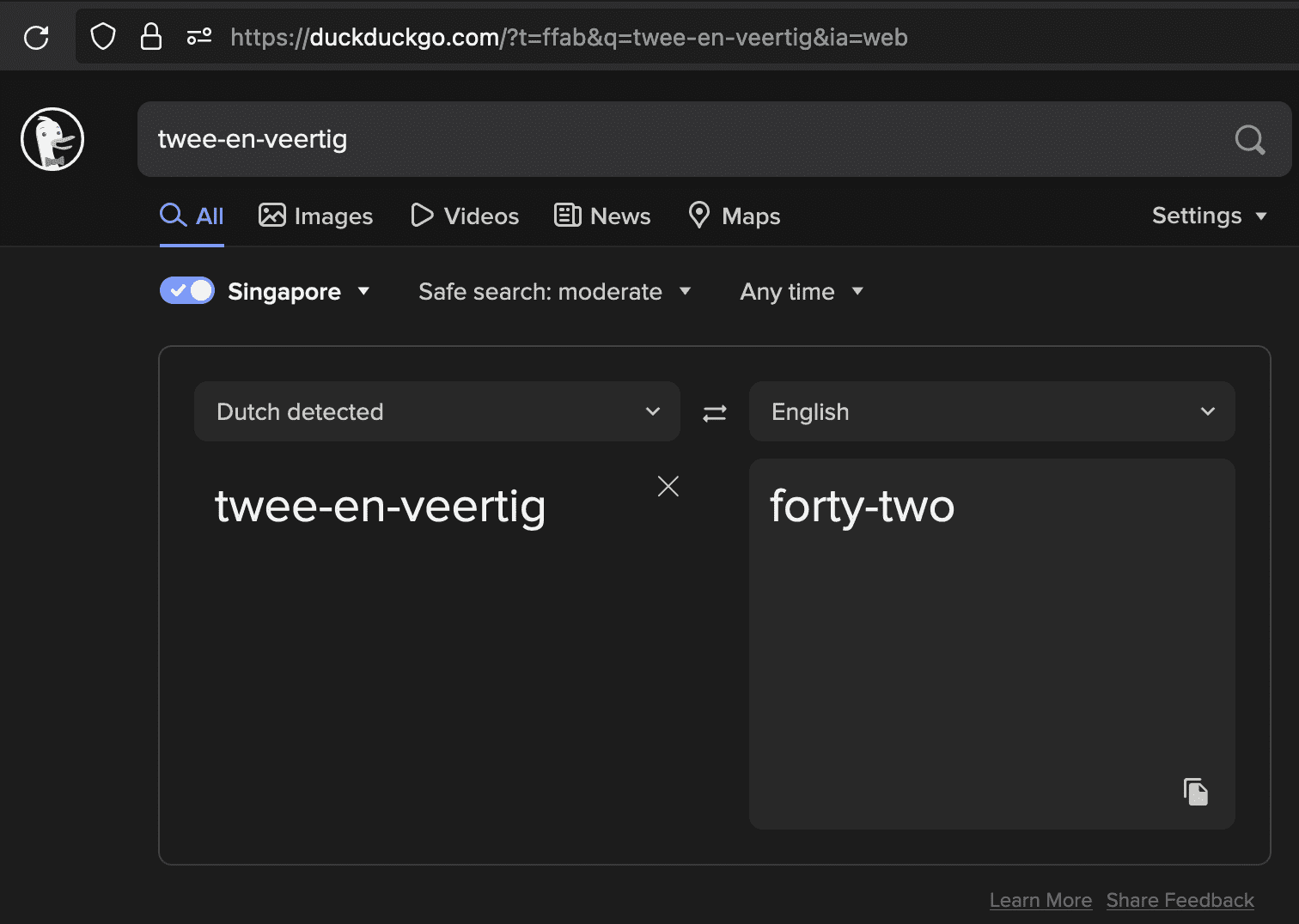
My German is relatively basic, but this is true for Dutch as well. 42 is pronounced twee-en-veertig ("two and forty").
Spoken language was in existence before written language. Many numerals existing today were created long before reading was practised, so if there is any direction in a language at all, German does not "read" "backwards", it speaks "backwards".
But then, very likely numerals are not named with regard to direction at all, but for the logic behind counting. In Breton, the number eighteen has the name tri-ouch "three (times) six" – I cannot discern any direction in this numeral. In Finnish, eighteen is called kah-deksan-toista "two (from) ten (in the) second (ten)". The logic seems to be to view the decades and then say how far into which decade we are. Again, there is no reading direction implied in the number name. Similar to this Finnish logic, Old Norse used a counting system not based on tens, but on dozens and multiples of the divisors of twelve (e.g. 60 = "Schock" in German). "364 days" in Old Norse is fiora dagar ens fiortha hundraths "four days into the fourth hundred (= 120)". (Please note that "hundred" once meant 120.) I don't claim to understand the logic behind "einundzwanzig", but the question might be to understand the thinking behind numerals and find out about historic counting systems, not about reading direction.
Omicron
[...]
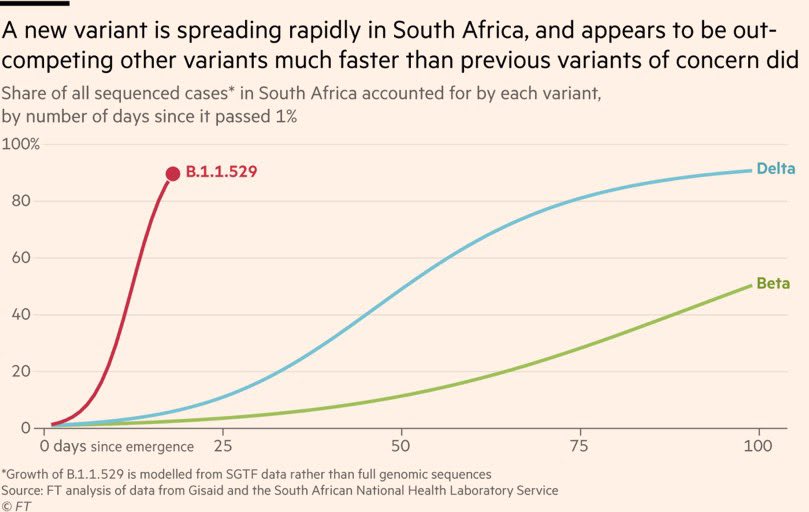
Even if you did succeed, what then? How long are you going to keep your borders closed? A restriction to a few countries might help the first week, but within a month it won’t even much matter, because there’s too much spread elsewhere. It’s not like a variant worse than Delta is going to go away any time soon, so you’re stuck in a permanent state that in most places both can’t be created and can’t be sustained if you did create it.